A YouTube to Skool classroom is 1 folder your AI turns into a lesson with files, a landing page and an email. Under 10 minutes. 1 prompt. Every video I publish becomes a Skool lesson in my community that way. In under 60 days there are 571 people in that Skool, and the badge on my name says I'm active. I didn't ask for it. It showed up because every lesson ships with files people can point their own AI at.
What Does a Skool Classroom Lesson Need?
4 things. The video. A post under it that tells the story of the session. Files attached under the lesson. And a place to talk about it.
A member asked me if I could add a lesson check-in to my classrooms like Jake does. So I looked at what a lesson in his room actually has, and it was those 4. Most classrooms have the video and nothing else. Those get watched once.
A lesson that ships files gets used. The member opens the file, pastes it into their AI with their own business in it, and runs the prompt at the end. That is why they come back, and it is why the room grew.
Skool has an add button under every lesson. Files, links, transcripts or a pinned community post go there. So every lesson of mine gets 4 things. The video. The drop post as the lesson text. The zip under add. A pinned check-in post.
How Does a YouTube Video Become a Skool Lesson?
It starts in the video's own folder, not a download. When the render finishes, the script and every spoken word are already on disk in that folder. So the package starts there. The line never re-watches its own video.
Here are the 6 files 1 video turns into.
1. The drop post. The community post. The story of the session with the mistakes left in. Then the files, 1 line each. Then how to use them. Then what's next. Paste ready. The post is the lesson text.
2, 3, 4. The strategy files. 1 per thing that mattered in the video, not 1 per chapter. Each 1 teaches the thing in plain words and ends in a prompt the member pastes into their own AI. The prompt is the product. The rest is packaging. The Claude Code skills a small business actually runs on are the same idea 1 level down. The how gets written once, in a file.
5. The term sheet. Every term from the video in 1 line each.
6. The room record. Who built what off the lesson, in their own words, including what broke. People share more when they see themselves in the record.
Then the zip. The strategy files, the term sheet and the record in 1 file. Made once.
Claude Code does all of it off 1 prompt because the folder is built on the Interpretable Context Methodology. Every folder carries a note that says what it is for, so the AI reads the room before it writes. It is the same shape as the Claude Code second brain from the last video, 1 level up.
How Does 1 Zip Become a Lead Magnet and an Email?
1 zip does 3 jobs.
It is the download under the lesson in the classroom.
It is the same file the landing page emails you after you type in your email. The page for the video has the video on it and an opt in box under it.
It becomes the attachment in that email, so anyone's AI can open it without a login, or even joining the community if they choose.
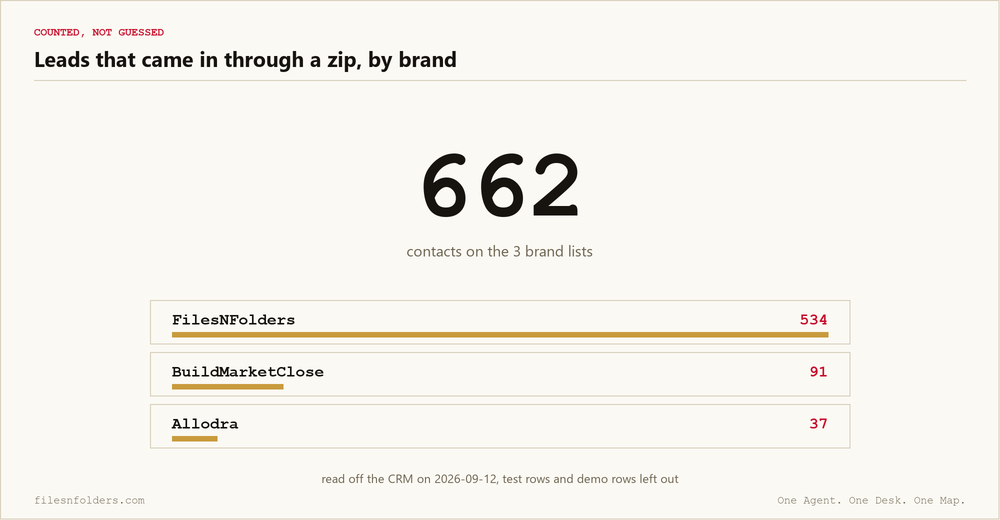
600 plus leads came in through zips like that 1, across 3 brand funnels. I had my AI count it off the CRM before I said it on camera.
Every door ends in the Skool. The landing page's thank you page says go get in the community. The email says post your first lesson. The lesson is in the community.
Why This Is an Ownership Question
The lesson lives on Skool. The files live with me. That is the part to hear.
Text files in a folder on my machine, backed up, named after the video. If Skool changed its terms tomorrow, the 6 files still exist. The zip still mails. The landing page still trades the zip for an email on a list I own. The platform is a room I rent to talk in. The content is mine.
That is the same reason I run my CRM on my own stack instead of renting it. The room can change. The files and the list do not.
Do It Tonight
The 3 strategy files, the term sheet and the room record from this video are free under the lesson in the community, and on the video's page. Start with the-4-things-a-skool-lesson-needs.md. Paste it into your AI with 1 lesson you already have and run the prompt at the end. It tells you which of the 4 you are missing, then writes it.
The folder method is Jake Van Clief's and David McDermott's Interpretable Context Methodology. The end-session package, the production line, and the 4 things a lesson needs are mine.