An AI receptionist for a chiropractor answers every call in the practice's voice, asks the questions a great front desk asks, and books the appointment on the real calendar. I know because I built one live on camera, called her on speaker with no safety net, and watched her beat my price objection and book me a real appointment. Her whole first call cost 26 cents.
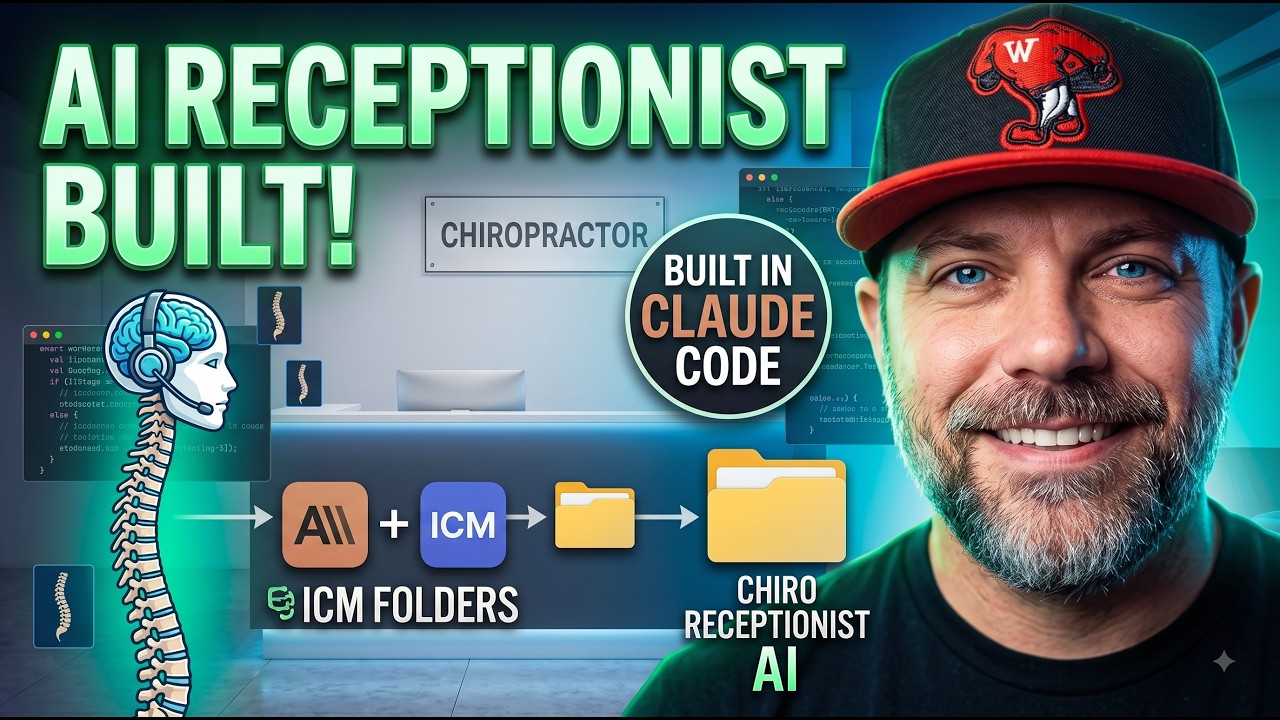
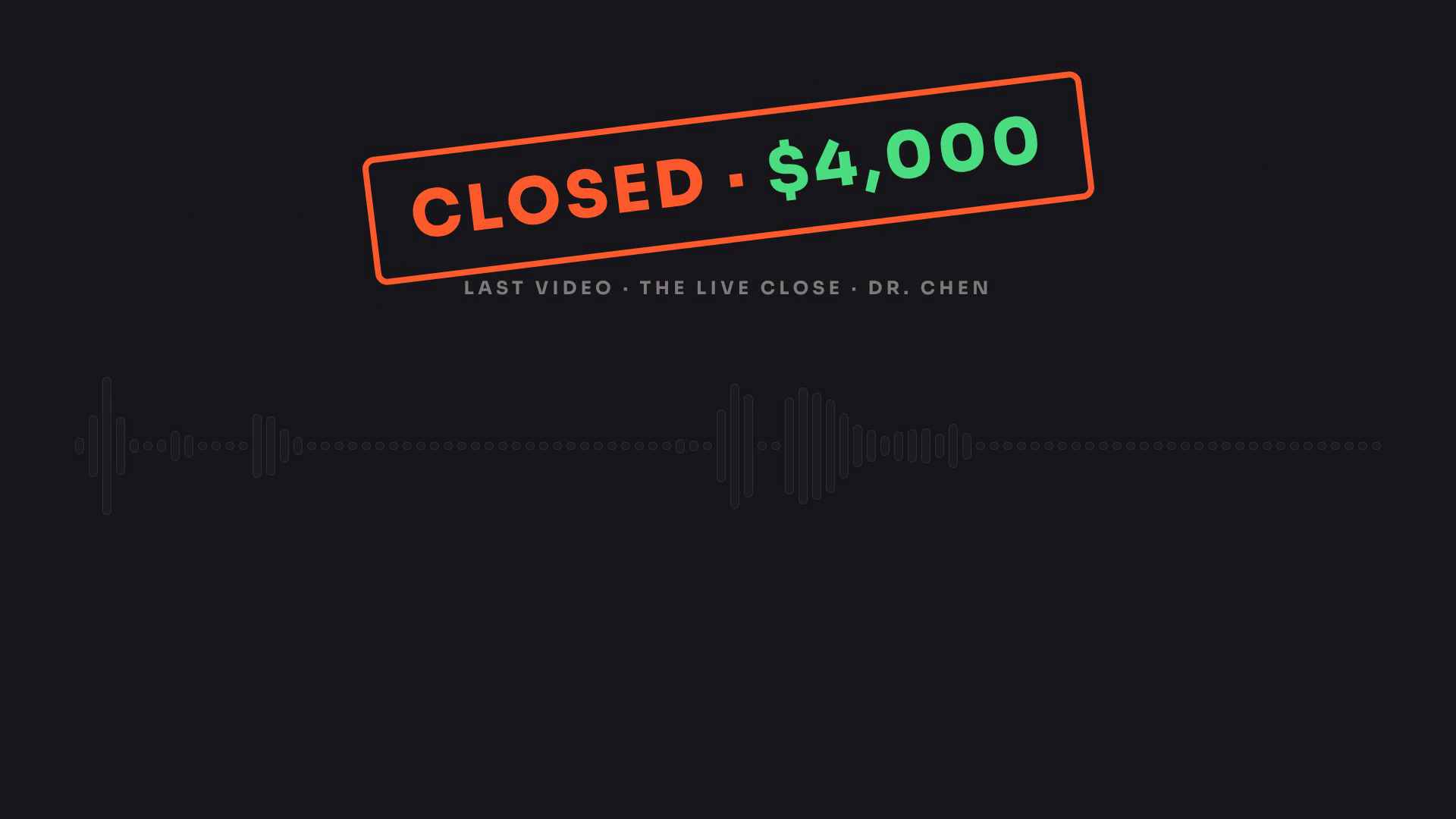
The wild part: the chiropractor paid $4,000 for her BEFORE she existed. The video opens with the actual close, then you watch the entire build in 1 sitting.
What does an AI receptionist for a chiropractic office actually do?
She answers the phone like your best front desk on her best day, every single time. Not a phone tree. Not "press 1 for hours." A warm voice that hears "my lower back is killing me," responds with real sympathy, and runs the exact call flow that fills a schedule:
- She lands the trust frame. "You've called the right place. Dr. Chen has helped 1,000s of patients over the last 10+ years."
- She diagnoses. Tell me more about your pain. When did it start? What have you tried?
- She gets a commitment. "Are you looking to see a doctor right now, or do you want to wait the pain out?"
- She runs the 1 to 10 pain scale, and a high number sells the caller on their own urgency.
- She books. Real times, off the real calendar, with a confirmation email on its way before the caller hangs up.
Every caller to a chiropractor is already in pain. Nobody is shopping. The front desk is the most important sales seat in the practice, and this one never misses a call, never has a bad day, and never lets a person in pain hang up without an appointment. You can watch her run that exact flow live at 37:29 in the video.
How much does an AI receptionist cost a chiropractor?
The rented answer: $99 to $499 per month from the AI receptionist vendors, or about $10 per call from a service like Smith.ai's chiropractic answering plans. Most vendor pages will not show you a real per-call number at all, which is why lists like CallBird's pricing roundup are the closest the market gets to honesty.
My measured answer, from the actual bill: her first full call, 4 minutes 16 seconds from "thank you for calling" to a booked appointment, cost $0.26. That is about 9 cents a minute, because I own the wiring instead of renting a middleman platform. Run those same minutes through the typical rented stack and you pay $0.50 to $1.00 a minute for the identical call.
That gap is not a rounding error. It is the whole business model of the companies charging $499 a month. The rent is the margin, the same math I broke down in the real cost of an AI receptionist for small business and the markup hiding inside AI voice minutes.
Can it really book appointments and handle "how much is it?"
Yes, and the price objection is the moment most people doubt. Here is what she did on camera when I threw it at her mid-call:
She never quoted a number she could not back. She pivoted to the free consultation the practice actually offers, gave the reason his slots fill up quick, and went straight back to "what time works best for you today?" 90 seconds later the appointment was on the calendar and the confirmation email was in my inbox.
That is not a canned soundbite. It is a sales framework compressed onto an inbound call, written into her instructions in plain English.
How I built her in 1 sitting
The order matters more than the tools. The deal came FIRST: the practice paid $4,000 before the receptionist existed. Then the build, live on camera:
- Her folder. Everything she knows lives in plain-English text files, organized with the folder methodology the whole build runs on.
- Her page. 1 readable page: who she is, her call flow, her objection answers, and the things she may never say. The test: if a human could read that page and play her on the phone convincingly, the AI can too.
- Her home, calendar first. She lives inside the practice's account in my platform, and she does not get a phone until the booking calendar provably works.
- Her number and voice. A fresh local number and a warm voice, wired in minutes.
- The moment of truth. I called her on speaker, played a patient in real pain, and let her run the whole flow with no net.
How do you know it's any good?
You grade it like a sales rep, not like software. Her first live call scored 9 of 11 on a written grade sheet: every question in order, the objection beaten, a real booking on a real calendar. She missed 2 beats, and both fixes were edits to 1 text file, done the same night. No rebuild, no ticket, no vendor.
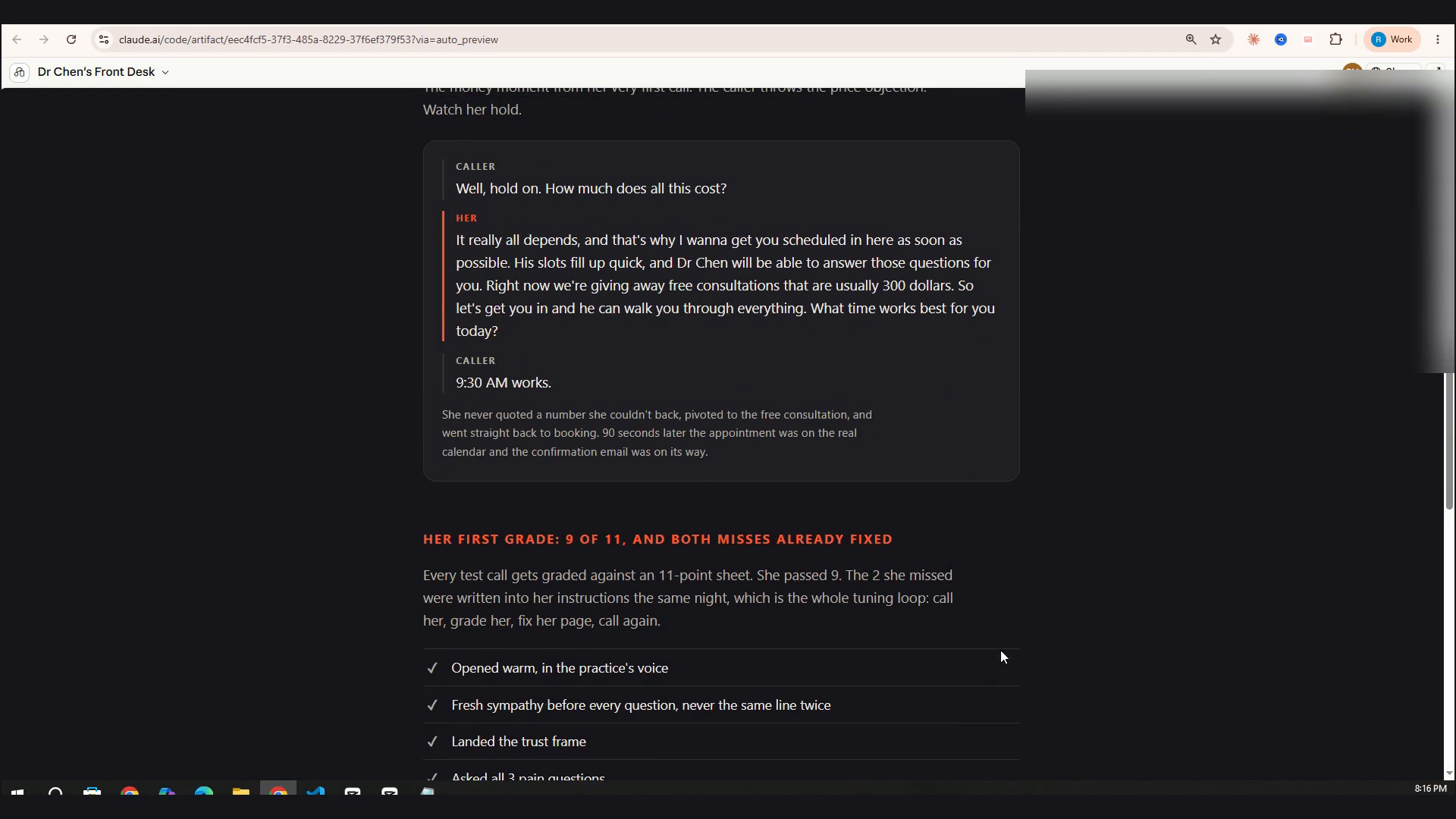
The graded call breakdown is at 42:55 if you want to see what she missed and how fast a text-file fix lands.
What about patient privacy?
A front desk receptionist and a clinical records system are different jobs, and the line matters. She books appointments, takes callback details, and answers front-desk questions. She does not diagnose, store treatment records, or discuss clinical information, the same boundaries a human front desk keeps. If you run a covered practice, your obligations under HIPAA sit with how you handle records, and anything touching protected health information belongs in your compliant systems, not in a receptionist's call notes. Build the boundary into her nevers on day 1, the way I did on camera.
Should you rent one or own one?
If you rent at $299 a month, that is $3,588 a year, forever, for something a practice uses every single day. The vendor can raise the price, change the terms, or sunset the product, and your front desk goes with it.
The build in this video belongs to the practice outright. The wiring costs about 9 cents a minute, the instructions are text files the owner can read, and nobody can raise the rent. If you would rather sell these to practices under your own brand, that is exactly the play in white label AI voice agents, and the growth tax math works the same way it does for every rented tool: the analyzer will show you what your own stack is leaking.
Watch the whole thing, the close, the build, and the live call: the full 56-minute video. The files and the exact page I wrote for her are in the free community linked under the video.