Owning your CRM means one thing: you hold the code. Not a login. Not a "lifetime deal." Not a workspace on somebody else's platform. The actual software, running on accounts you control, that keeps working whether you ever pay anyone another dollar or not.
There are three ways to get there. Build it from scratch, "build" it on a no-code platform, or buy the code outright. Two of those are traps. Let's walk through all three, with real numbers.
What does it actually mean to own your CRM?
You own your CRM when you hold title to the code and it runs on your own accounts. That's it. If your access depends on a monthly payment clearing, you don't own anything. You're a tenant.
Here's the test: stop paying for 90 days. What happens?
If the answer is "my contacts, pipelines, and automations vanish," you're renting. GoHighLevel, HubSpot, Salesforce, all of them. You can pay one of these landlords for ten years, build your whole business inside their walls, and the day you stop paying, you own exactly what you owned on day one: nothing.
There's an old real-estate word for the opposite of that: allodial. It means held in absolute ownership, owing rent to no landlord. That's the standard. Your CRM either meets it or it doesn't.
Why "build your own CRM" usually means renting anyway
Search "own your CRM" and Google hands you a page full of guides on building one with a no-code platform. Read them closely, because every single one ends the same way: build your "own" CRM... on our subscription.
That's not ownership. That's decorating a rental.
A no-code CRM builder gives you custom fields, custom pipelines, custom dashboards, and zero title. monday.com's own guide puts the platform cost at $1,500 to $3,750 a month for a 25-person team. That's rent, and it climbs every time you hire. Seat creep is the growth tax: the better your business does, the bigger your landlord's cut.
And the thing you spent weeks "building"? It doesn't export. Your custom boards and automations are written in the platform's language, for the platform's walls. Miss a payment and your CRM does the same disappearing act as any other rental. The word "build" in those guides is doing a lot of dishonest work.
What does building a CRM from scratch really cost?
Real custom development gets you real ownership, and even the no-code crowd admits what it costs: six to eighteen months and an upfront investment that can reach hundreds of thousands of dollars. Then you own a codebase you have to maintain, patch, secure, and extend forever, which means a developer on payroll or an agency on retainer.
If you're a software company, fine. If you're an agency owner, coach, or consultant, you just bought yourself a second job building the thing your first job needed.
For decades those were your only two options. Rent forever, or spend a year and six figures building. That's exactly why the landlords got away with it.
The third option: buy the code
The option the guides never mention: buy a CRM that's already built and take title to the code itself.
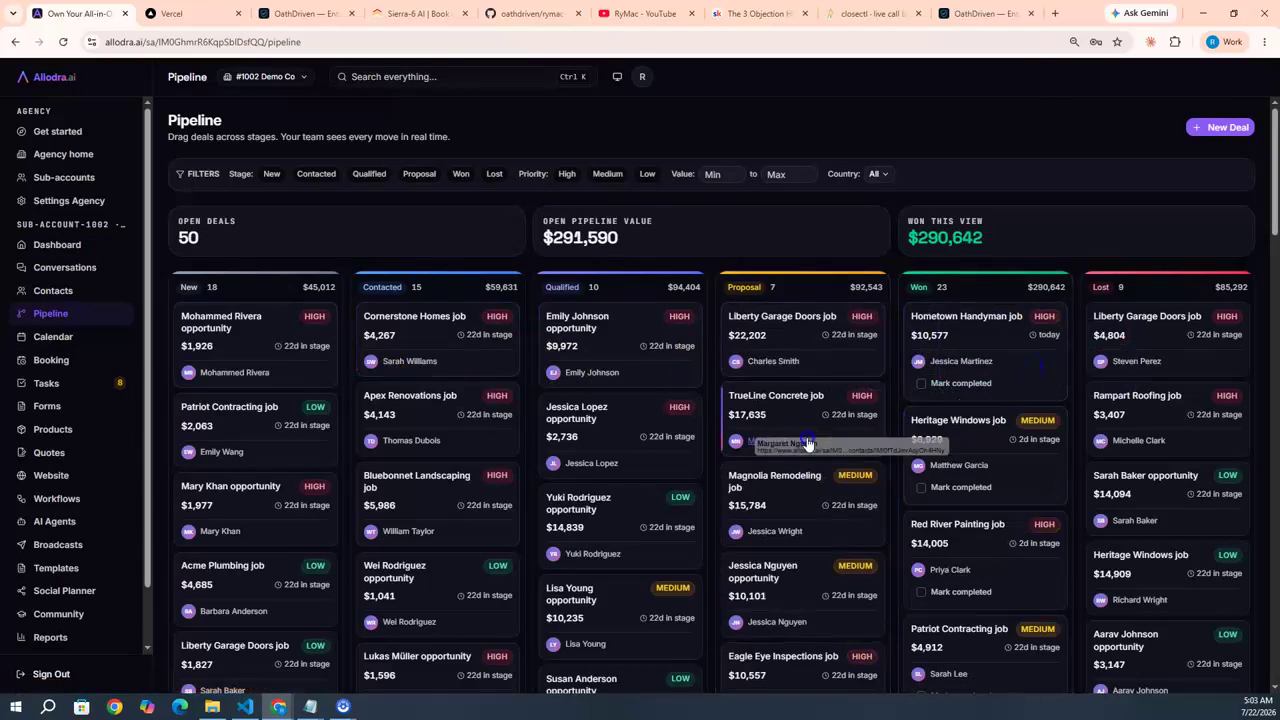
That's the Allodra model. You get the actual codebase, yours free and clear: CRM, pipelines, funnels, automations, booking, forms, and native AI chat and voice. It runs on enterprise infrastructure you sign up for yourself, on your own accounts: Google Cloud, Cloudflare, GitHub, Vercel.
 Their free tiers cover what 99% of small businesses will ever use, and we
show you exactly how to set it up (or do it for you).
Their free tiers cover what 99% of small businesses will ever use, and we
show you exactly how to set it up (or do it for you).
The AI part matters more than people realize. Platforms rent you "AI employees" at $300+ a month for chat and a white-label voice agent that costs pennies at the source. When you own the code, you're wired straight to the AI providers. Same AI, no middleman markup. You pay the wholesaler, not the reseller.
And because you hold the code, nobody can rent it back to you. No seat fees. No per-account fees when you white-label it for your own clients. No growth tax, ever.
What about lifetime deals and self-hosted CRMs?
Honest answer: a lifetime deal is not ownership, and most self-hosted options aren't built for running client accounts.
A "lifetime license" on someone's platform still lives on their servers, under their terms of service. Break a rule, or watch them get acquired and "sunset" the deal, and your lifetime ends early. You bought a long lease, not a deed.
Self-hosted one-time CRMs do exist, and for a solo operator tracking contacts, some are fine. But if you run an agency, look for what's usually missing: white-label client workspaces, built-in AI chat and voice, funnels, booking, and automations under one roof. A contact database you own is a start. It's not a business engine.
What does owning actually cost?
Allodra charter ownership starts at $900. One time. The exact path and price depend on how much you want done for you, and we sort that out on a 15-minute call, not a pitch.
Compare that against your rent. Most agencies pay $300 to $1,200 a month for the software their business runs on, before the usage markups (see what GoHighLevel pricing really adds up to for the line-item version). Run your own numbers in the free cost analyzer and look at the 10-year figure. Most people have never multiplied their rent by 120 before. It leaves a mark.
After the buy-in, your ongoing cost drops to what the thing actually costs to run: free-tier infrastructure plus AI usage billed at pennies. The expensive part of your old CRM was never the software. It was the landlord.
Who shouldn't buy their CRM?
If you love your current platform, don't care about owning anything, or want a free tool, keep renting. No hard feelings. Renting is simpler right up until the rent increase email lands.
But if you're done building equity in someone else's software, the path is short: apply for a charter build, take a 15-minute qualification call, and take title. Two minutes to apply. The application asks what you run now and what it costs you, so the call starts at the real conversation instead of the background check.
You've paid enough rent. Own the thing.
And if you're wondering who you'd be buying from, the founder's story is right here. It starts with a lanyard.